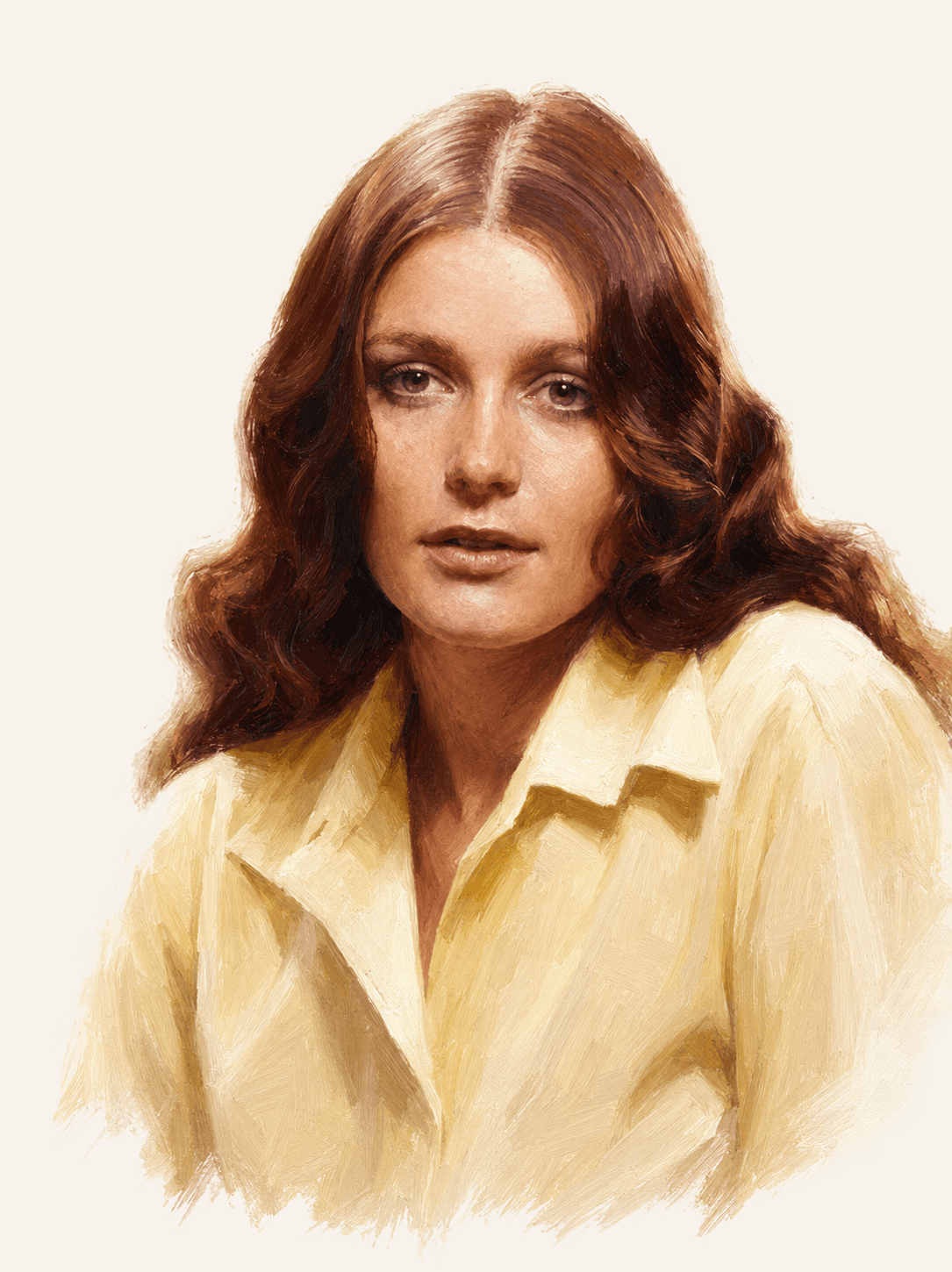
Margot Kidder 1970 publicity photo (crop).png
Public domain (United States)
Painted adaptation; background changed to #f7f3ec by The Bipolar Biography Project.
Full image attribution details
Margot Kidder
ActorCanada
1948–2018
Margot Kidder was a Canadian actor best known for playing Lois Lane opposite Christopher Reeve in Superman (1978) and its three sequels. Her other major films included Brian De Palma’s Sisters, Black Christmas, The Great Waldo Pepper and The Amityville Horror. [2]
Career and work
Kidder began her career in Canadian film and television in the late 1960s and gained wider attention through roles in Quackser Fortune Has a Cousin in the Bronx, Brian De Palma’s Sisters, Black Christmas and The Great Waldo Pepper. Her performance in Black Christmas earned her a Canadian Film Award. [3][2]
Her international breakthrough came in 1978 when she played reporter Lois Lane opposite Christopher Reeve in Superman. She returned as Lois in three sequels and also starred in The Amityville Horror. Later in her career, Kidder continued working in film and television, including appearances in Smallville, The L Word and Brothers & Sisters. [4][2]
What has been publicly discussed
- Kidder said she experienced severe mood swings for much of her life. She was diagnosed with manic depression, the term then commonly used for bipolar disorder, in 1988, but initially rejected the diagnosis and recommended treatment. [1][5]
- Although Kidder had been diagnosed years earlier, her bipolar disorder became widely known after her highly publicized manic and psychotic episode in Los Angeles in 1996. She subsequently spoke openly about manic depression in interviews and said that publicly discussing what had happened brought her relief and prompted messages from people who said her openness had helped them. [7]
- Kidder described mood swings extending through much of her adult life. During manic periods, she said her thinking and activity would begin to “speed up”; before her 1996 crisis, she stopped sleeping and eating, consumed increasing amounts of caffeine and eventually became psychotic. [1]
- During that 1996 episode, Kidder spent several days wandering around Los Angeles while experiencing paranoid beliefs that people were pursuing her. She tried to disguise herself, slept outdoors and was eventually found in a backyard and taken for psychiatric care. Kidder later described the episode as manic and said her thoughts had been moving extraordinarily quickly. [7][6]
- She also experienced severe depression. Kidder said her mood swings began early in life and publicly disclosed that she had attempted suicide at age 14. [1]
- Kidder initially rejected the bipolar diagnosis she received in 1988 and refused the recommended lithium treatment. She later said she disliked lithium and, at different times, tried other approaches including Depakote, acupuncture and nutritional supplements. [8][5]
- In later interviews, Kidder said she was not taking psychiatric medication and instead described using acupuncture, vitamins, minerals and what she called orthomolecular medicine. She also said she had learned to pay close attention to sleep, stress and regular eating after recognizing how strongly those factors had preceded her 1996 episode. [1][9][7]
- Kidder returned to acting relatively quickly after her 1996 episode. By late 1997, she had completed eight projects since the crisis and said she had learned that protecting her sleep, limiting stress and eating regularly had to take priority over her professional ambitions. [7]
- She did not describe herself as permanently free of symptoms. In 2000, Kidder acknowledged occasional periods when she could feel herself becoming unusually “hyper,” while saying that she had become better at recognizing and responding to changes in her mental state. [9]
- After her 1996 episode, Kidder became an outspoken critic of the stigma surrounding mental illness. Drawing on her own experience, she argued that people experiencing psychiatric illness should not be treated as separate from the rest of society and said that isolation can intensify fear and insecurity. [5]
- Kidder continued speaking publicly about mental health in later years. In 2001, the California Women’s Mental Health Policy Council gave her its Courage in Mental Health Award for speaking openly about mental illness. [5]
“I didn’t know enough to get the signs that, oops, I’ve stopped sleeping, this is really bad, I better do something about it.”
— Margot Kidder [1]
Sources and other resourcesExpand to view the sources used in this profile and resources to learn more.
Sources used for this profile
The following sources contain information that supports the claims made on this page.
CNNLarry King Live: Battling Depression Mood swings, suicide attempt, manic symptoms, psychosis, treatment and warning signs.
Canadian Film Encyclopedia“Margot Kidder” Career biography.
Canadian Film Encyclopedia“Black Christmas” Canadian Film Award.
View all 9 sources
Television AcademyMargot Kidder Later television work.
Los Angeles Times“A Woman of Steel” Diagnosis, treatment and anti-stigma advocacy.
Los Angeles Times“Kidder Aided Along Journey by Samaritans” 1996 manic and psychotic episode.
Los Angeles Times“Back From The Brink” Mania, public disclosure and management.
People / Yahoo EntertainmentMargot Kidder Lithium, Depakote and other treatment approaches.
TV GuideMargot Kidder Later elevated mood and management.
Learn more
Recommended books and other resources about Margot Kidder and their experiences.