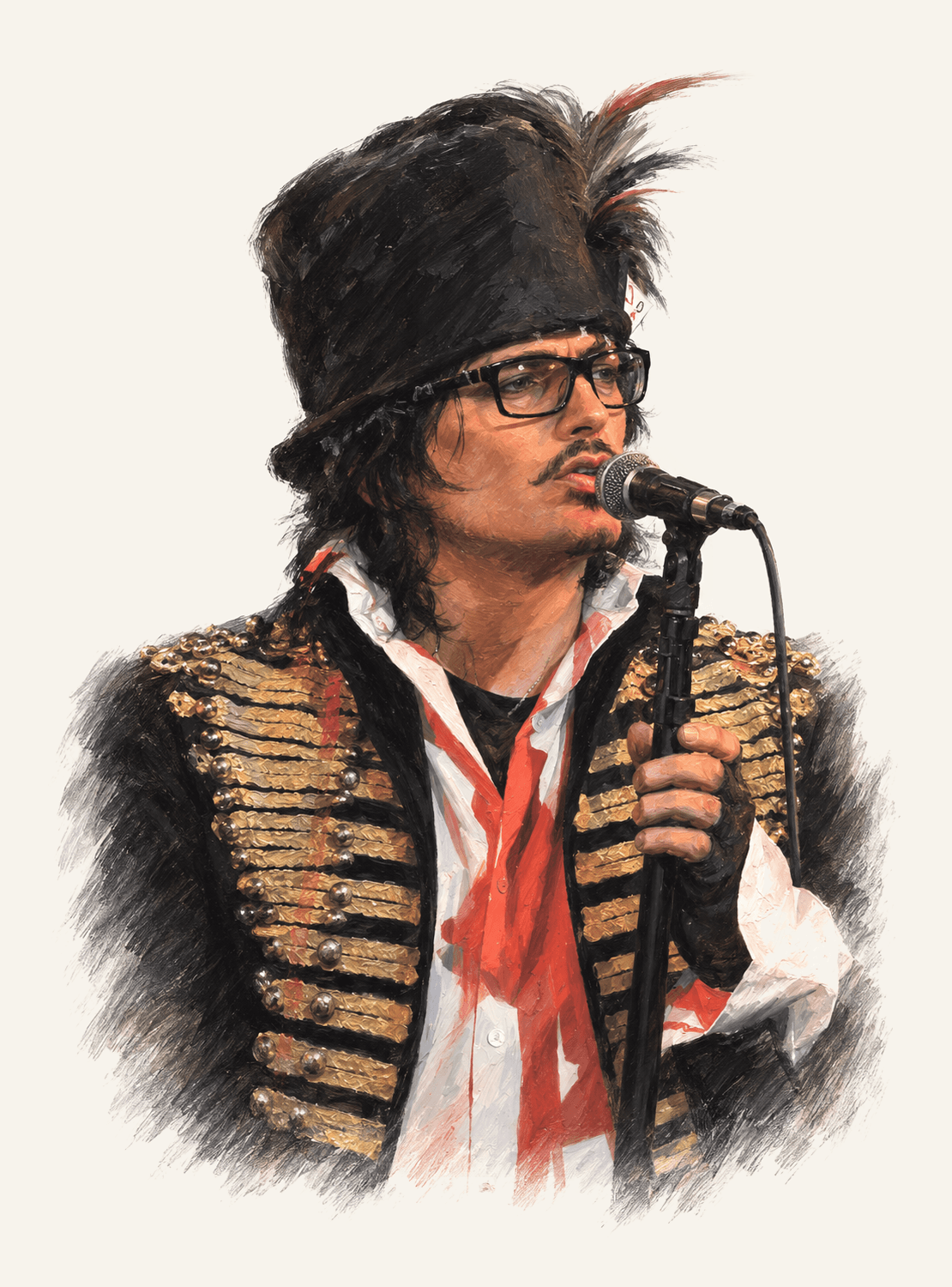
Adam Ant.jpg
CC BY-SA 2.0
Painted adaptation; background changed to #f7f3ec by The Bipolar Biography Project.
Adaptation shared under the same license.
Full image attribution details
Career and work
Adam Ant emerged from London’s punk scene in the late 1970s as the frontman of Adam and the Ants. The band’s breakthrough album, Kings of the Wild Frontier, reached No. 1 in the UK and was followed by Prince Charming. The singles “Stand and Deliver” and “Prince Charming” also reached No. 1. [2]
After Adam and the Ants ended, he continued as a solo artist, beginning with Friend or Foe in 1982 and the single “Goody Two Shoes.” He has released several further solo albums and has also worked as an actor in film and television. [3]
What has been publicly discussed
- Ant has publicly discussed being diagnosed with bipolar disorder. He has said the diagnosis was made after he admitted himself to a psychiatric hospital in 1994 while experiencing hypomania. [3]
- Ant has described periods of severe depression as well as episodes of hypomania. Recalling a depressive period around 2000–01, he said he reached a point where he literally could not move. [4]
- His mental-health difficulties have also led to repeated psychiatric hospitalizations. In 2002, he was detained under the Mental Health Act and admitted to the Royal Free Hospital. He was sectioned again the following year and spent about six months in a psychiatric hospital. [5][3]
- Ant has described being treated with psychiatric medication at different points in his life. He has said medication could help when he recognized warning signs, while also speaking negatively about periods when side effects left him feeling heavily sedated and less able to function or create. [3][4]
- He has also said that managing his condition involves recognizing potential triggers and warning signs and seeking medication when he believes he needs it. [3]
- Ant has said that one of his aims in discussing bipolar disorder publicly is to challenge the stigma surrounding mental illness. He described receiving an overwhelming response after speaking more openly about his diagnosis and said he hoped addressing bipolar disorder through his music would encourage other people to discuss their own experiences. [1]
- He has emphasized that there is hope for people living with bipolar disorder and that it is possible to manage the condition without allowing it to control their lives. [1]
“There is hope … you can live with it and get on top of it instead of having it control your life.”
— Adam Ant [1]
Sources and other resourcesExpand to view the sources used in this profile and resources to learn more.
Sources used for this profile
The following sources contain information that supports the claims made on this page.
LAist“After 17 years, 80s rocker Adam Ant returns with a new solo album” Interview covering his bipolar disorder, stigma and his perspective on living with the condition.
Official ChartsAdam & the Ants Official UK chart history supporting the band’s major albums and singles.
The Guardian“Adam Ant: ‘To be a pop star you need sex, subversion, style and humour’” Long-form interview covering his career, diagnosis, hypomania, hospitalizations and medication.
View all 5 sources
The Guardian“‘Anyone over 30 belongs to me — bisexual, male, female, gay, whatever’” Interview covering his severe depression and treatment.
The Guardian“Adam Ant committed to psychiatric hospital” Contemporary report confirming his 2002 detention and hospital admission.
Learn more
Recommended books and other resources about Adam Ant and their experiences.