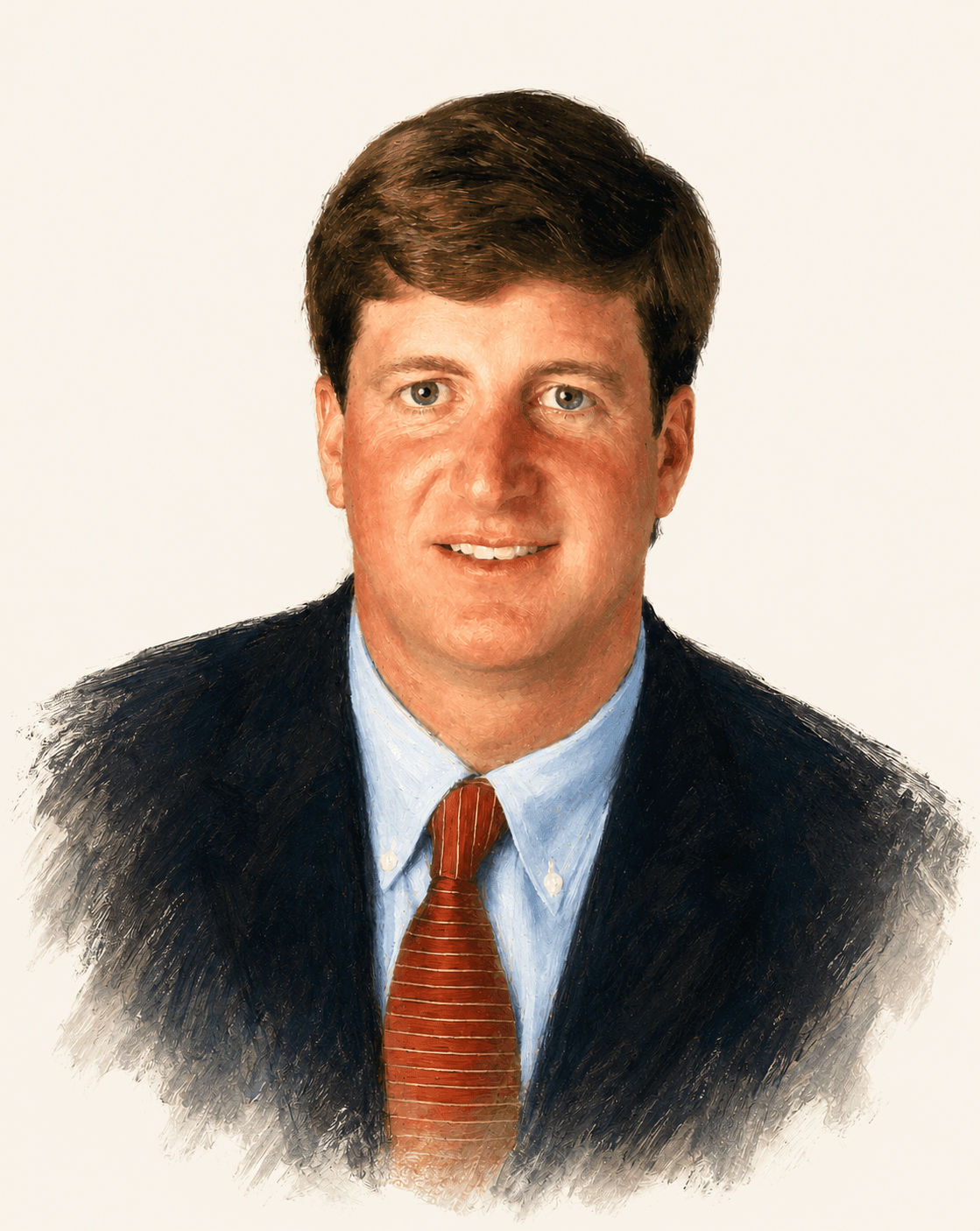
Patrick J. Kennedy
PoliticianAdvocate
United States
Patrick J. Kennedy is a former U.S. congressman who represented Rhode Island for 16 years. He became a leading voice on mental health policy in Congress and was the lead sponsor of the Mental Health Parity and Addiction Equity Act of 2008, which required many health plans to cover mental health and substance-use treatment no more restrictively than physical health care. [1]
Career and work
Kennedy represented Rhode Island’s First Congressional District in the U.S. House of Representatives for eight terms, serving from 1995 to 2011. During his 16 years in Congress, much of his legislative work focused on mental health, addiction and neurological disorders. [1]
He is best known as the lead sponsor of the Mental Health Parity and Addiction Equity Act of 2008, which required many health plans to cover mental health and substance-use treatment no more restrictively than comparable physical-health treatment. He also authored or co-sponsored legislation addressing PTSD, Alzheimer’s disease, aging, child development and neurological research. [1]
After leaving Congress, Kennedy founded The Kennedy Forum, focused on mental health and addiction policy, and co-founded One Mind, which supports collaborative brain research. He has continued working on mental-health policy and parity enforcement and, in 2024, joined Healthsperien to lead a national mental health and addiction policy practice. [1]
What has been publicly discussed
- Kennedy has been diagnosed with bipolar II disorder. He has described receiving psychotherapy from age 13 and later receiving treatment for depression, anxiety, substance use and bipolar disorder. [2]
- He began speaking more openly about his mental health following a highly publicized 2006 car crash and subsequent treatment for addiction. In his 2015 memoir A Common Struggle, he discussed his bipolar disorder in much greater detail and described his decision to break what he saw as a culture of secrecy around mental illness and addiction. [5]
- Kennedy has described being more prone to severe depression than to full mania. He has also said that he has engaged in high-risk behaviour and can become “very manic” in his approach to life, while noting that he has not experienced some stereotypical manic behaviours such as excessive shopping or spending. [2]
- His mental health difficulties were closely intertwined with substance use. Kennedy has described using alcohol, cocaine and prescription drugs over many years, including while serving in Congress, and has said that substance use often functioned as an attempt to relieve depression and emotional pain. [7]
- In 2006, after crashing his car into a barrier near the U.S. Capitol while under the influence of prescription medication, he returned to treatment at the Mayo Clinic. The incident became a major public turning point in how openly he discussed both addiction and mental illness. [3]
- Kennedy has described receiving treatment for both bipolar disorder and addiction over many years, including repeated periods in rehabilitation. After the 2006 Capitol crash, he entered treatment at the Mayo Clinic and began speaking more openly about the extent of his mental health and substance-use problems. [5]
- He has also described long-term recovery as requiring structure and continued care. In a 2021 interview, Kennedy said he was attending a 12-step recovery program every day, sometimes twice a day, continuing with therapy, exercising regularly and keeping an early sleep schedule. [6]
- Kennedy describes himself as being in long-term recovery from addiction and has been sober from drugs and alcohol since February 22, 2011. He has said that maintaining that recovery depends on continued treatment, daily 12-step meetings, regular exercise, therapy and a structured routine. [6]
- He has also said that he views both addiction and bipolar disorder as chronic conditions that require ongoing management rather than illnesses that are simply cured. [7]
- Kennedy has made mental health and addiction advocacy a central part of his public work. In Congress, he was a leading sponsor of the Mental Health Parity and Addiction Equity Act of 2008, which established federal requirements for many health plans to cover mental health and substance-use treatment on terms comparable to medical and surgical care. [8]
- After leaving Congress, he founded The Kennedy Forum, which focuses on enforcing and expanding mental health parity, improving access to treatment and advancing broader mental-health policy reform. He has also drawn on his own experience with bipolar disorder and addiction to argue that mental illness should be treated as a health issue rather than a source of shame or secrecy. [9]
“You are winning because you’re maintaining your recovery.”
— Patrick J. Kennedy [10]
Sources and other resourcesExpand to view the sources used in this profile and resources to learn more.
Sources used for this profile
The following sources contain information that supports the claims made on this page.
Patrick J. KennedyAbout Patrick Provides Kennedy’s congressional career, committee work, role in passing the Mental Health Parity and Addiction Equity Act, founding of The Kennedy Forum, and publication of A Common Struggle.
Philadelphia MagazinePatrick Kennedy and the Jersey Girl Supports the bipolar II diagnosis and Kennedy’s descriptions of depression, high-risk behaviour and periods he regarded as manic.
The Washington Post, 2006Rep. Kennedy to Enter Rehab After Crash Documents the Capitol crash, Kennedy’s prescription-drug addiction and his decision to return to the Mayo Clinic for treatment.
View all 10 sources
The Kennedy ForumPatrick J. Kennedy Supports Kennedy’s work on federal mental-health parity legislation and his later advocacy through The Kennedy Forum.
Patrick J. Kennedy and Stephen FriedA Common Struggle: A Personal Journey Through the Past and Future of Mental Illness and Addiction Kennedy’s memoir is a primary source for his history of bipolar disorder, addiction, treatment, recovery and decision to speak publicly about mental illness.
Book or book pageTown & CountryPatrick and Amy Kennedy on mental health and recovery Supports Kennedy’s description of long-term recovery, continued therapy, 12-step participation, exercise and structured routines.
60 MinutesPatrick J. Kennedy on mental illness and addictionTelevision interview The Kennedy ForumThe Kennedy Forum The Kennedy ForumThe Kennedy Forum Child Mind InstituteChild Mind Institute
Learn more
Recommended books and other resources about Patrick J. Kennedy and their experiences.
- A Common Struggle: A Personal Journey Through the Past and Future of Mental Illness and AddictionBook · Patrick J. Kennedy and Stephen Fried
Kennedy’s memoir about bipolar disorder, addiction, treatment, recovery, his family’s history with mental illness and addiction, and his work to change mental-health policy.
- Profiles in Mental Health CourageProfile · Patrick J. Kennedy and Stephen Fried
A collection of first-person stories from people living with mental illness and addiction, developed from Kennedy’s broader advocacy work and interest in making these experiences more visible.
- Patrick J. Kennedy on mental illness and addictionTelevision interview · 60 Minutes
A substantial television interview about Kennedy’s own history with bipolar disorder and addiction, his recovery, and his argument for treating mental illness and addiction as medical conditions rather than sources of shame.